


-
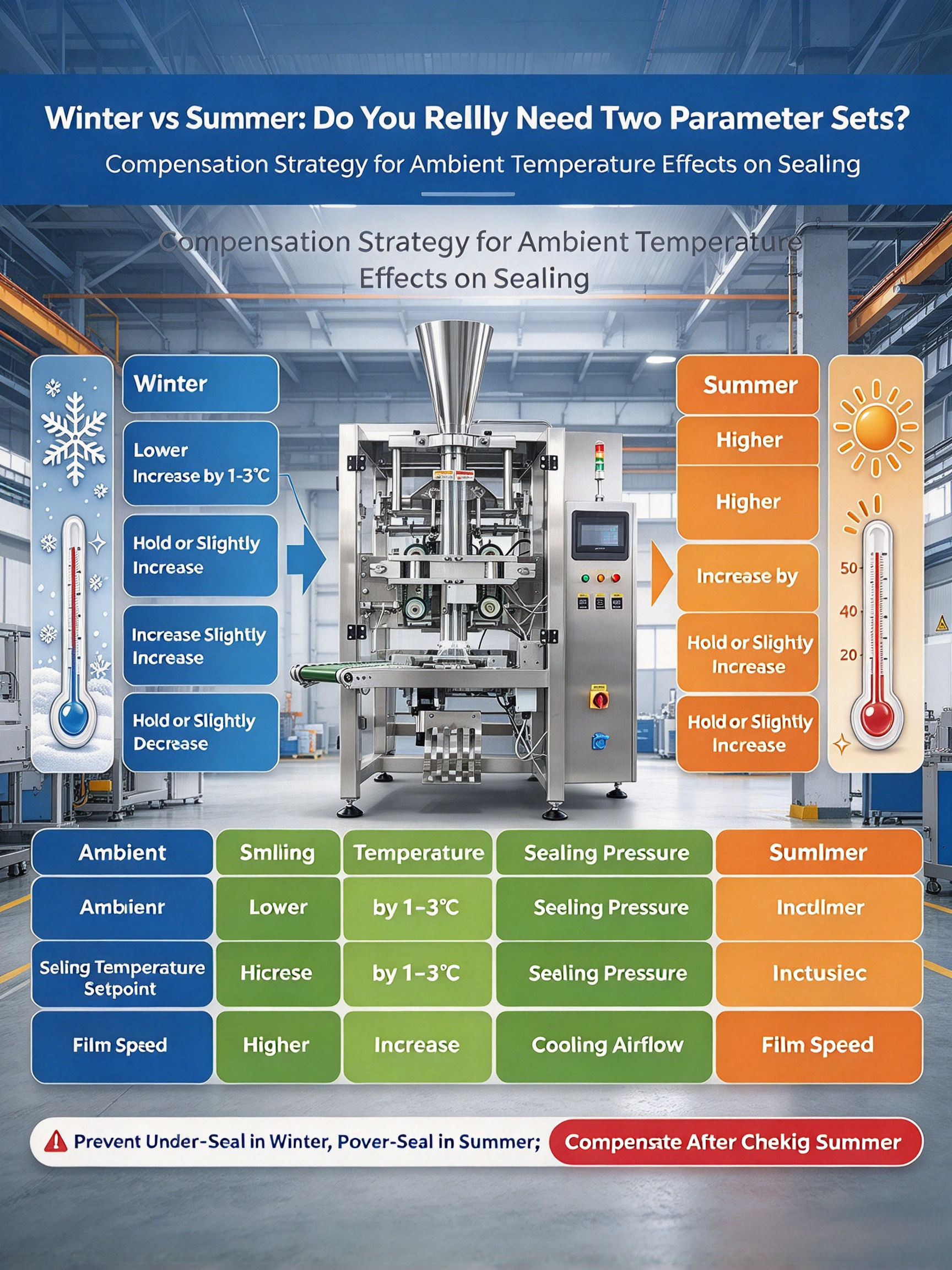
Winter vs Summer: Two Parameter Sets? Ambient-Temperature Compensation for VFFS Sealing
Same VFFS, weak seals on cold mornings and burst bags after hot afternoons? The machine is not broken — the ambient temperature changed. The manual specifies 0-45C operating range and says temperature settings must follow film speed, thickness and ambient. This guide gives the 3-step seasonal compensation: 20-min low-temp warm-up, re-set seal temp (lower in summer, higher in winter), and extend delay/seal time only if still leaking. Temp first, time second.
-

Jelly, Peanuts, Oats: Anti-Blocking Tips for Different Granular Materials on a VFFS
Coated jelly, large peanuts, dusty oats — the same VFFS blocks the funnel on different materials. This guide splits common products into free-flow vs bridging-prone groups by flowability: free-flow pellets run at a standard hopper angle, while poor-flow materials need a steeper angle and, if needed, a pulsed vibrator on the hopper wall. It also keeps the 2mm folding-guide-to-forming-tube clearance and gives a 3-step routine: classify, tilt, vibrate.
-

Chips, Detergent, Frozen Food on One Machine? The Master VFFS Adjustment Formula
Chips need gas flushing, detergent evacuation, frozen food low-temperature fast sealing — same machine, different product, different parameters? Not really. The manual’s logic is four steps: set temperature by film material, set bag length by registration marks, center and tension the film, then fine-tune timing. This guide gives the master adjustment formula, a material temperature start table, and the leaking-bag order: sealing temperature first, timing only afterwards.
-

Machine Suddenly Dead? Check These 3 Lockouts Before Calling Service
Vertical packer suddenly dead and START does nothing? Skip the service call first. Three lockouts are most common: the E-stop was bumped and latches itself (twist it a little to release); the guard is not in functional position (open guard = no motion); the motor overload protector tripped (press its reset button). This 30-second self-test - E-stop, guards, main switch, heater, start - fixes most cases without a technician.
-
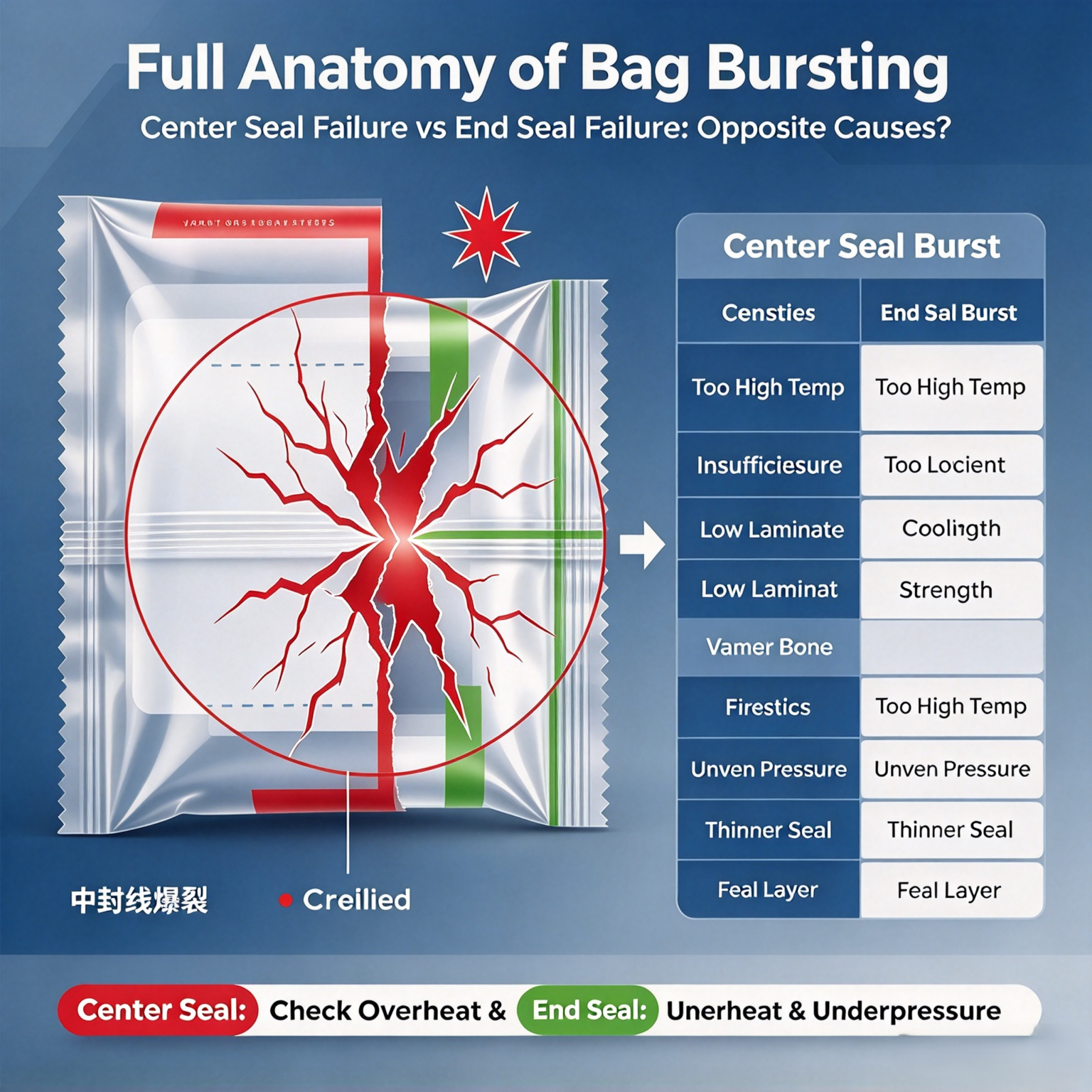
Burst Bags Explained: Middle-seal Bulge and End-seal Tear Have Opposite Causes
Does the bag bulge at the middle seal or tear at the end seal? The causes are nearly opposite - adjust the wrong way and it gets worse. Per the manual: a middle-seal bulge is often too hot, too much silicone oil, or over-inflation, so lower the middle-seal temp and use less oil; an end-seal tear is often too cold or uneven jaws, so raise the end-seal temp and re-level them. Also how the front/rear sponge on top vs bottom sets inflation or venting.
-
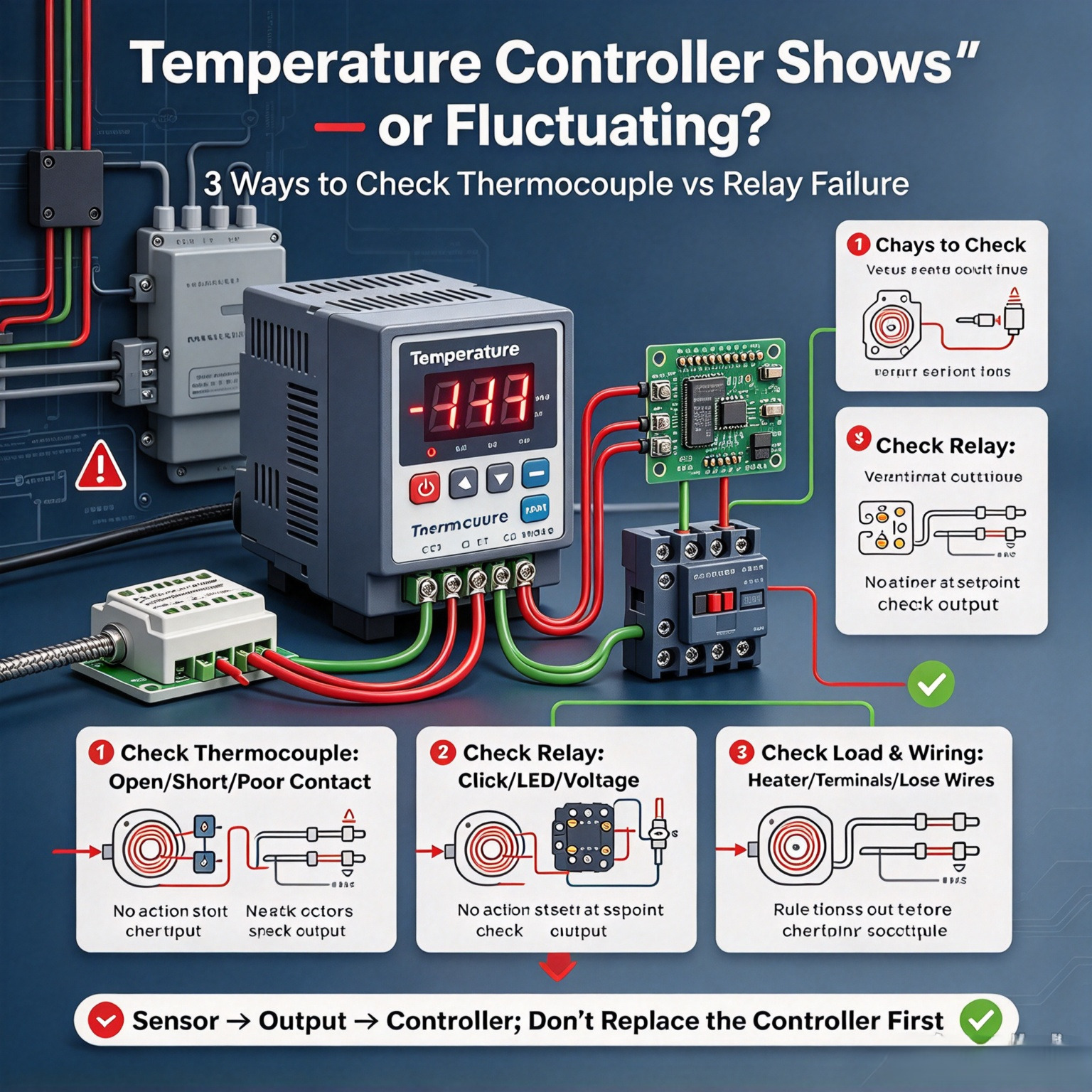
Temp Controller Shows --- or Jumping? 3 Tests to Tell Thermocouple from SSR
Blank display or jumping temps? Do not replace the whole part. Per the manual fault table: a --- readout usually means the thermocouple loop is open (no signal); runaway heating means the SSR is welded shut; power off and measure the heater with a multimeter - infinite ohms means burned, near zero means short. Also check loose terminals and over/volatile voltage. Rule: always cut power and use a qualified electrician.
-
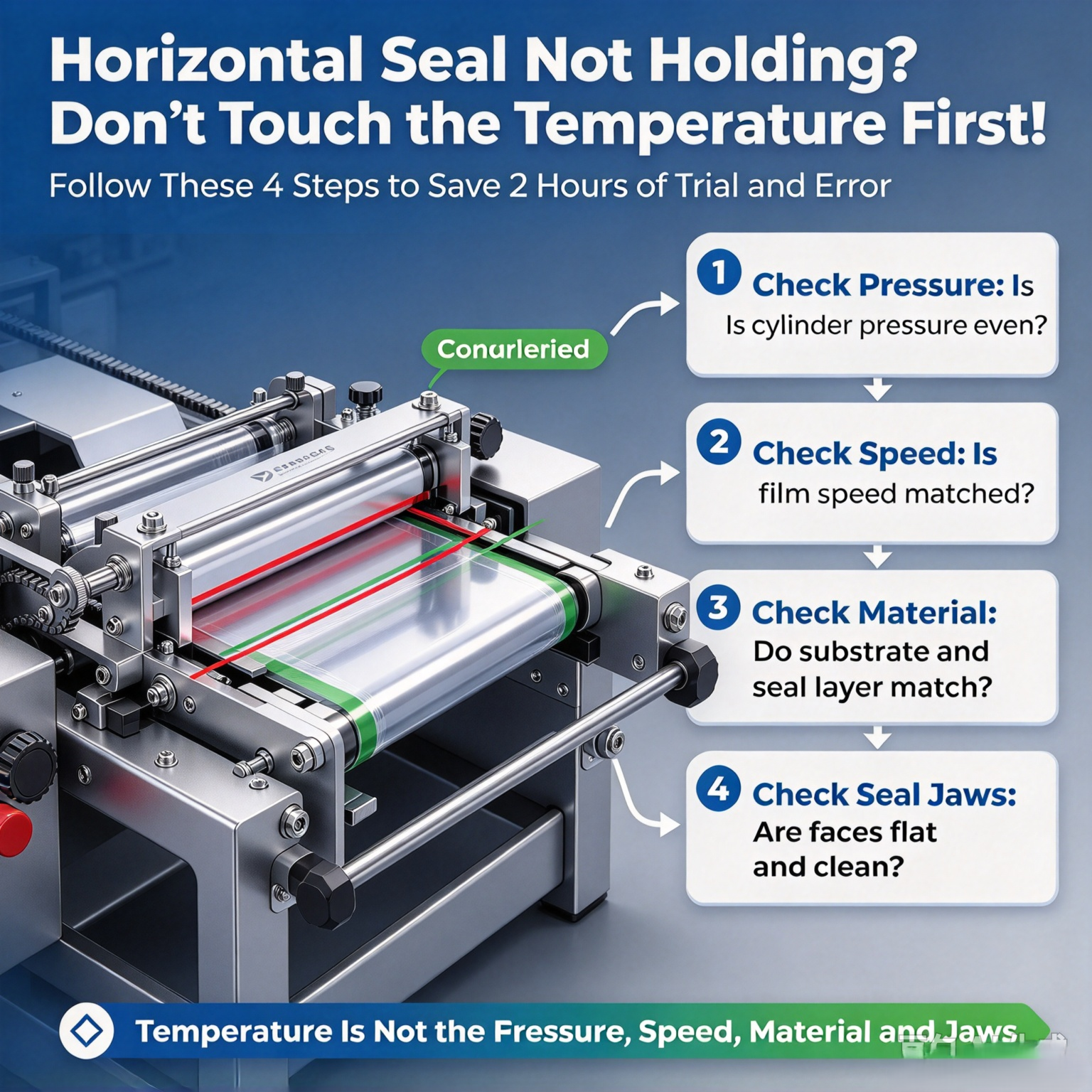
Horizontal (End) Seal Leaks? 4 Steps Before You Touch the Temperature
End seal leaks or tears? Operators usually reach for the temperature first - the longest detour. Per the manual fault table, go four steps: stop, cool, scrub the end-seal jaw with a wire brush dipped in silicone oil (dirty jaw is the #1 cause); check jaw misalignment and re-align; only then set temperature (0-399C, tune until both seals hold without leaking or wrinkling); lastly change poor film. This order fixes most failures on the spot.
-

Half-Year “Heart Check”: Don't Let PCB Dust Burn Your PLC
The PLC and circuit boards are the heart of the machine, yet untouched for half a year. Dust layers and loose terminals lead to overheating, tracking in damp weather, and arcing — the fault table lists a loose terminal as a cause of a blank temp controller. Per the manual: every half year check the terminal block and tighten loose wires, and blow dust and dirt off the components and PCBs with clean, dry compressed air. Always cut the power first; never work live; use a qualified electrician.


