

Winter vs Summer: Two Parameter Sets? Ambient-Temperature Compensation for VFFS Sealing
Winter vs Summer: Two Parameter Sets?
Ambient-Temperature Compensation for Sealing
Vertical Packaging Machine Encyclopedia ·— for operators who dread season changes

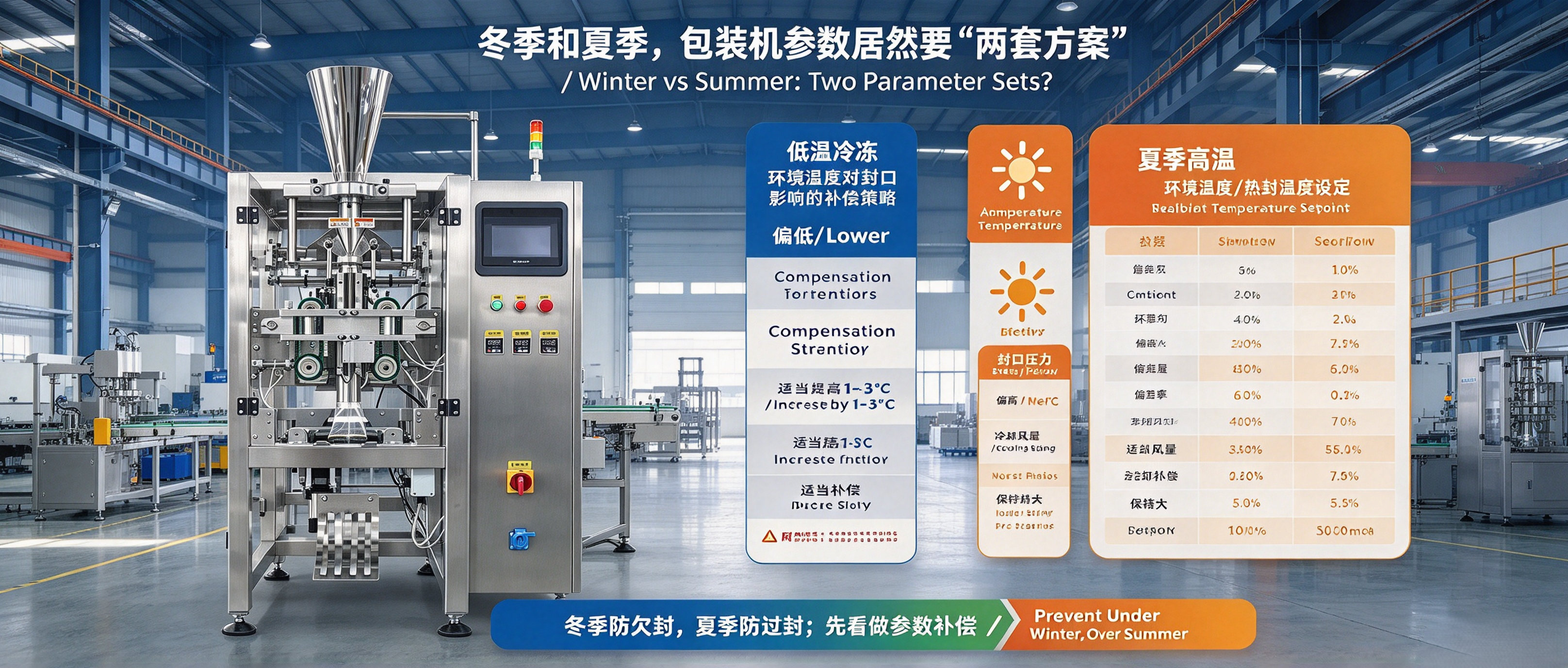
Cover: parameters must change with the season
Autumn settings were perfect — strong, clean seals. Winter comes and the same temperature setting suddenly leaves leaking seals. You crank up the controller and get burst bags and torn film.
The machine is not being fussy — physics is. The manual says the operating environment is 0 to 45°C. Within that range, every 10°C shift changes how much heat actually reaches the film. Parameters must shift too.
1. Why Two Seasons Need Two Sets
“The temperature controller is continuously adjustable from 0 to 399°C. The set value depends on packaging speed, film thickness and ambient temperature; the right value is when both seals are leak-free and wrinkle-free.”
— VFFS instruction manual — temperature controller operation
The key phrase is “ambient temperature”. Summer workshop at 35°C means the film is pre-warm and the jaws hold heat. Winter at 5°C means cold film and jaws losing heat to the air. The same setpoint delivers very different actual heat.
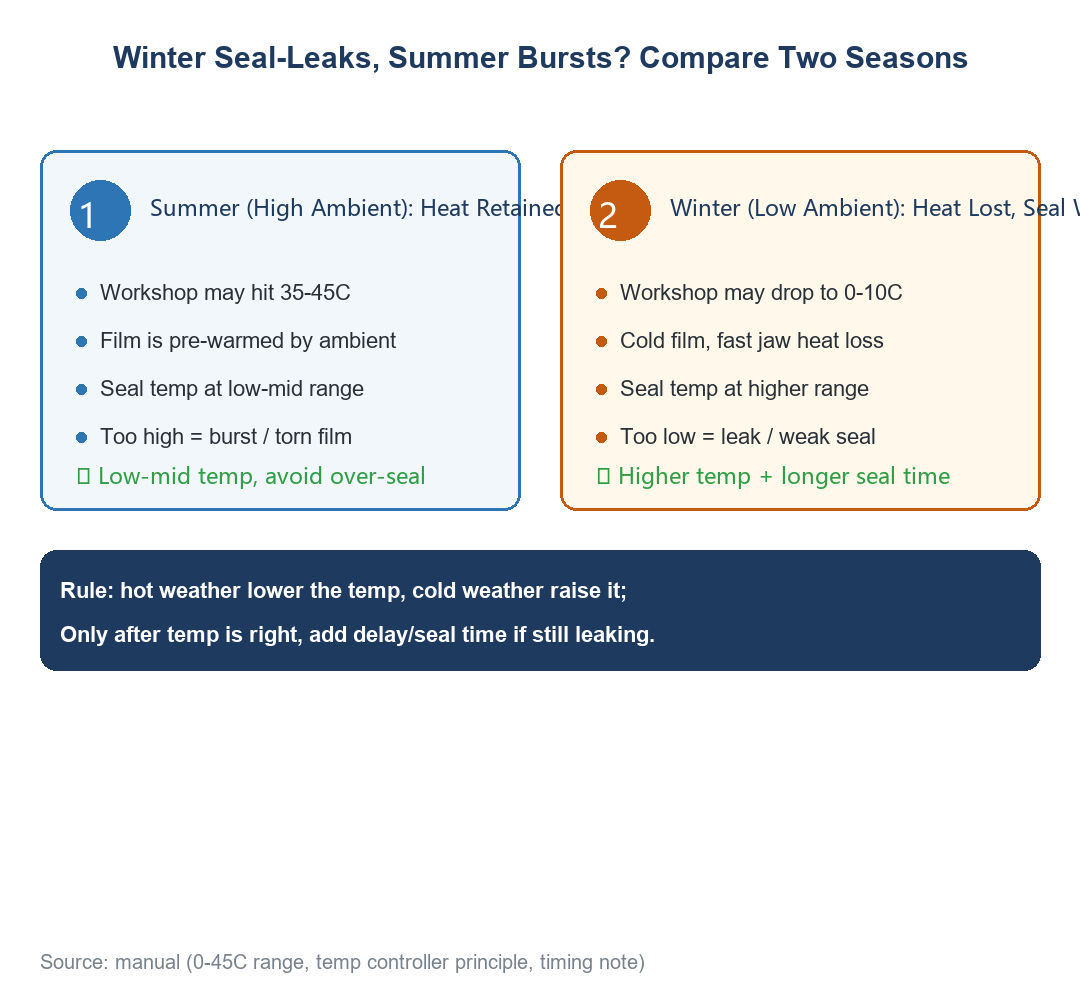

Fig. 1: Winter vs summer seal parameters (from the manual, operating range & controller principle)
2. Step One: 20-Min Low-Temp Warm-Up
“If the machine has been idle long or is being started for the first time, turn on the heater and run a low-temperature warm-up for about 20 minutes to prevent moisture in the heating section.”
— VFFS instruction manual — safety note 11
This matters most in winter. A cold workshop overnight can leave thin condensation on the heater band. Going straight to high temperature both shortens heater life and shocks the jaws. Warm up low for 20 minutes, let moisture escape and the jaws heat evenly.
⚠ After long idle or first-time start, always do the 20-minute low-temp warm-up. Going straight to full heat risks a moisture-damaged heater band.
3. Step Two: Re-Set Seal Temp by Ambient
After warm-up, re-confirm the seal temperature based on today’s workshop temperature:
• Summer (ambient >30°C): seal temp at low-mid range; too high causes bursting and torn end seals.
• Winter (ambient <15°C): seal temp at higher range; too low causes leaks and weak seals.
✔ Adjust only 5-10°C each step, run a few bags, and check. Target: both seals leak-free and wrinkle-free. Do not jump to the top.
4. Step Three: Extend Time Only If Still Leaking
“If packaging leaks due to film or low ambient temperature, first adjust the seal temperatures, then consider increasing the delay or action times.”
— VFFS instruction manual — timing settings
This sentence is the crux. For winter leaks, the order is:
temperature first, time second. If the temperature is wrong and you extend the seal time, you just press an already-overheated film longer — it tears more.
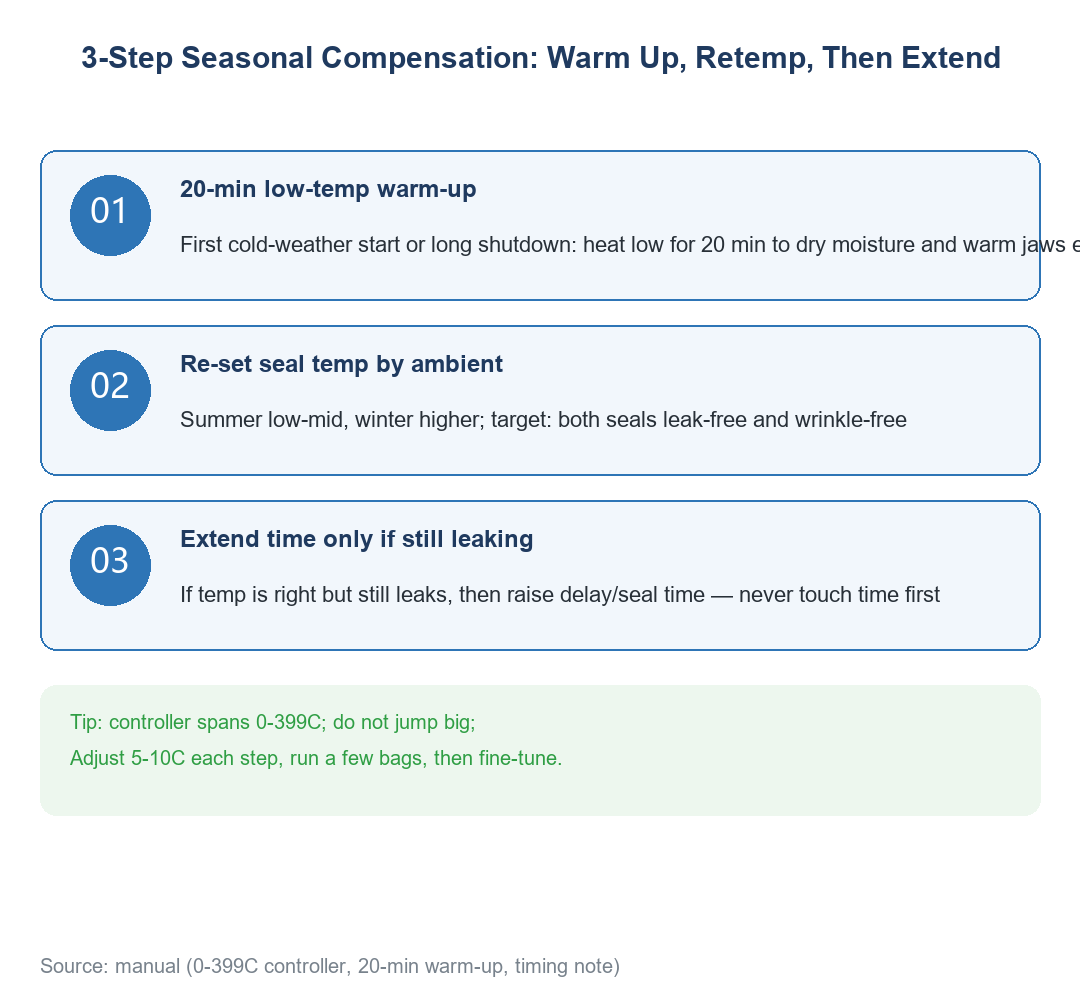

Fig. 2: 3-step seasonal compensation (from the manual, warm-up & timing note)
5. Seasonal Parameter Log
Log the parameters for each season so you can copy them back instead of re-learning:
Table 1. Seasonal parameter quick reference (target: leak-free, wrinkle-free)
|
Season |
Workshop Temp |
Seal Temp Trend |
Delay/Action Time |
|
Summer |
30-45C |
Low-mid |
Standard |
|
Spring/Autumn |
15-30C |
Mid |
Standard |
|
Winter |
0-15C |
Higher |
Slightly longer only if still leaking |
Final Thoughts
A VFFS is not a set-and-forget machine. Lower the temp in heat, raise it in cold; temperature first, time second. Hold this order and season changes stay calm.
Next article: the economics of a 5-year-old machine - repair or replace? Calculating downtime and scrap-rate costs.
Call to Action & Series Note
Still struggling to seal through the seasons? Send us your film type, thickness and current workshop temperature - our engineers will recommend summer/winter seal settings. Or reply with keyword “manual” to download the VFFS Instruction Manual (PDF).


