

90% of Packing Failures Fit 5 Words: A People-Machine-Material-Method-Environment Diagnosis
90% of Packing Failures Fit 5 Words: A People-Machine-Material-Method-Environment Diagnosis
Stop treating symptoms — clear a fault by checking five dimensions systematically
VFFS Machine Series — for operators, setters and mechanics
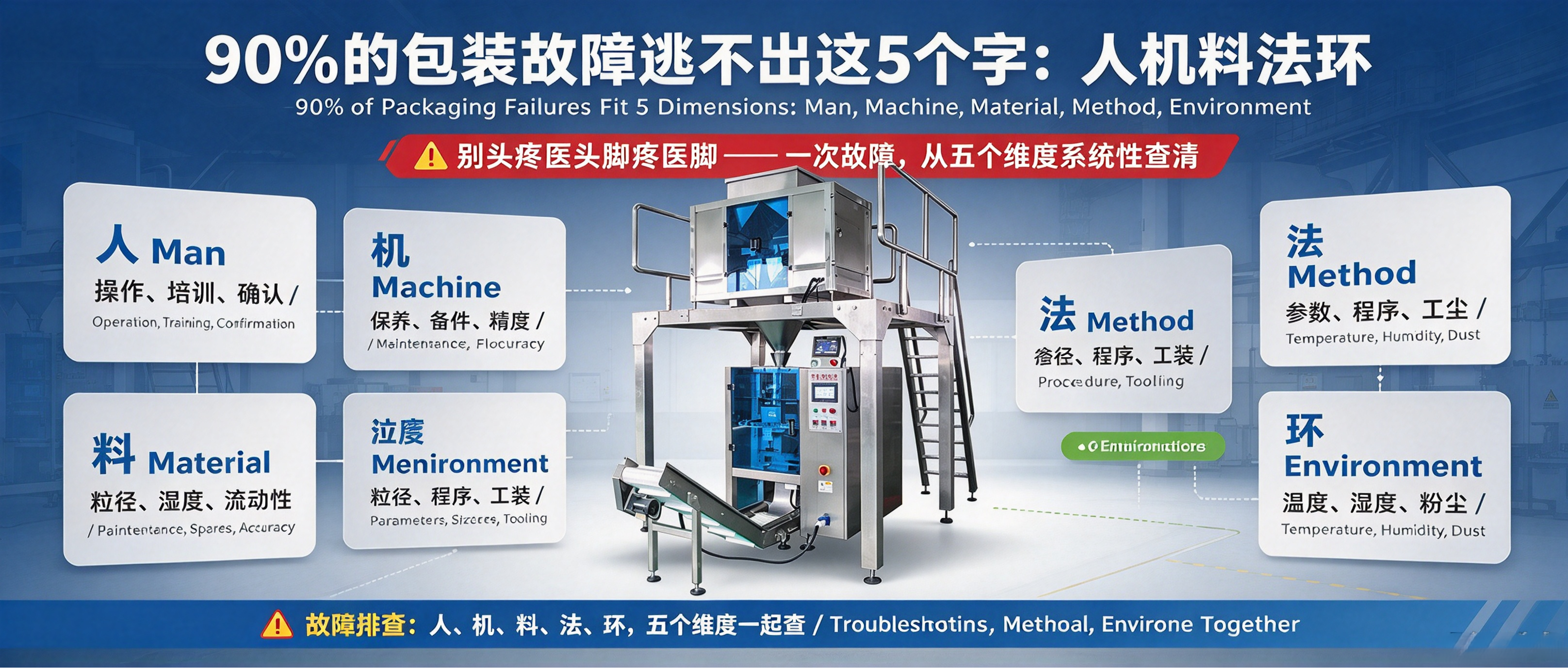

Cover: setter checking temperature control, electrician checking the cabinet — systematic diagnosis
Leaks, drift, freezes, noises — VFFS faults come in every shape, but 90% fit five dimensions: People, Machine, Material, Method, Environment. This article condenses the fault experience of Articles 10-30 into one systematic method: for each fault, tick the five dimensions item by item — rule out people first, then machine, material, method and environment — find the root cause before you touch anything.
01 People: Operations & Habits — Rule Them Out First
• Parameter fiddling: an operator moves temperature or speed by feel and seal pass rate quietly drops — check who touched the parameters;
• Bad start-up: no preheat before high heat (heater tubes burst), no pre-start check (a foreign object destroys the jaws);
• Poor cleaning: dirty hoppers and jaws grow carbon residue — seal temperature goes uneven;
• Bypassed guarding: tape on the safety switch for convenience — that is a hazard, not a fault cause.
✔ Check people first: if the same fault disappears next shift, it is 90% an operation issue — fix the habit, not the machine.
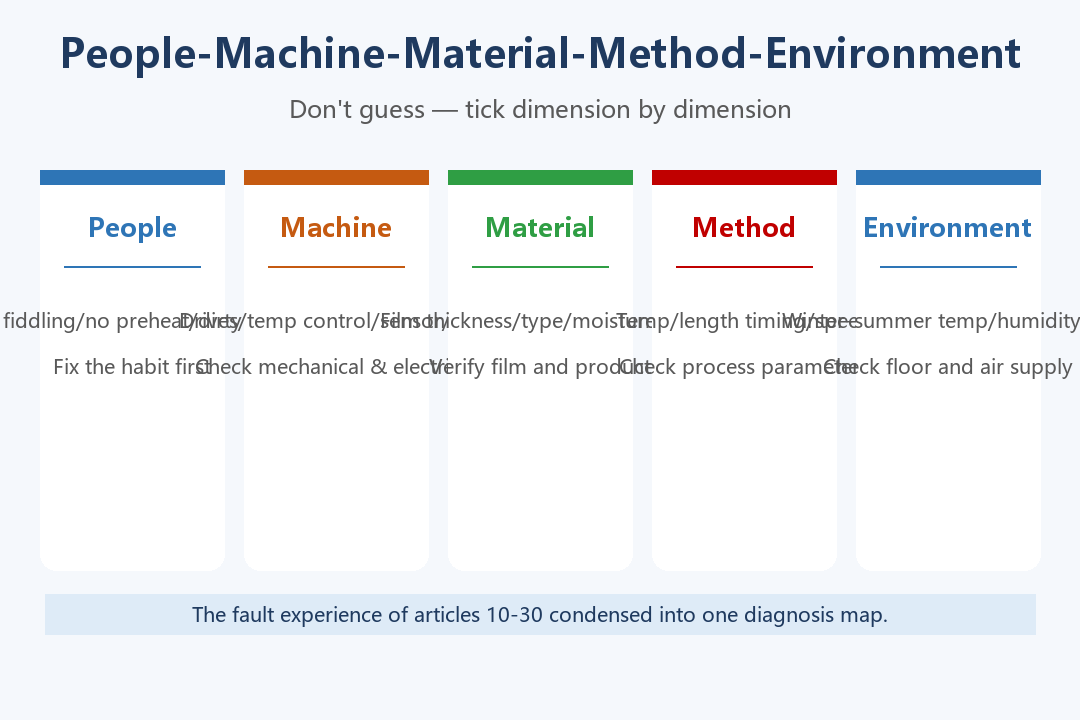

Fig. 1: Five-dimension diagnosis — the fault experience of Articles 10-30 condensed (into one map)
02 Machine: Mechanical & Electrical, Body-Check the Parts
• Drives: chain/belt tension, drive noise, bearing lube (see Article 20 drive diagnosis);
• Temperature control: display vs reality, aging heater tubes (see Article 23);
• Eye-mark & jaws: sensor drift, carbon build-up on jaws (see Articles 11/19);
• PCB: dust, loose terminals, moisture shorts (see Article 21 PCB care).
03 Material: Film & Product — Don't Let the Film Take the Blame
• Film: thickness and type (PE/laminate/aluminium) must match seal temperature — retune after a film batch change (see Article 15);
• Printing: blurred or low-contrast eye marks fool the sensor and bag length drifts (see Article 16);
• Product: powder bridges, pieces jam, fragile items crush — filler must match the material (see Article 27).
04 Method: Parameters & Process — Check the Benchmarks
• Temperature: for a cold-film leak, raise temperature first, then action delay — set by film/thickness/speed;
• Bag-length timing: 80-130/130-220/220-320mm map to different seal/cutter timings — retune on every product change;
• Speed match: intermittent ≤120 / continuous ≤300 bags/min — overspeed lags the seal and bursts pouches (see Article 24).
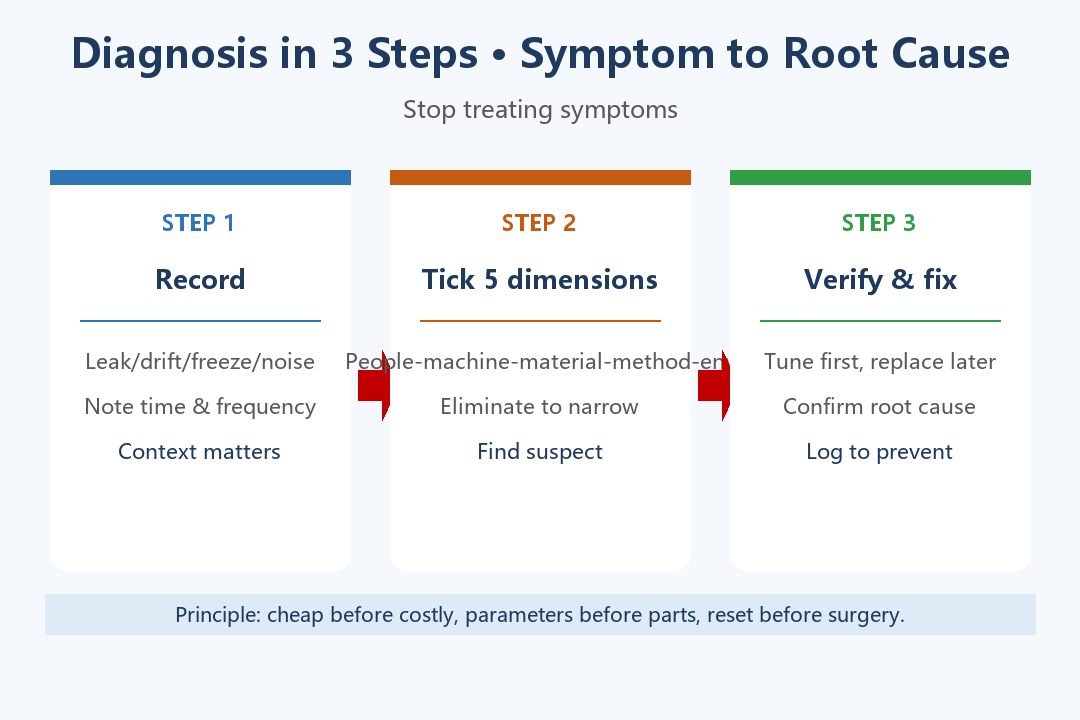

Fig. 2: Diagnosis in 3 steps — symptom to root cause (cheap before costly, parameters before parts)
05 Environment: Air & Climate — the Invisible Variable
• Winter-summer swing: ambient temperature shifts the temperature controller and film-pull parameters — seasonally retune (see Article 28);
• Humidity: rainy seasons wet the film and circuits — preheat and dehumidify;
• Air supply: low or surging pressure weakens cylinder actions — confirm stable air (6.5kg common per the operation flow).
06 One Diagnosis Sheet: Tick the Five Dimensions
• Record: leak/drift/freeze/noise — note time, frequency and context;
• Tick five: people → machine → material → method → environment, eliminate to narrow;
• Verify & fix: tune before replacing, reset before surgery, log the root cause to prevent recurrence.
Table 1. Five-dimension diagnosis sheet (integrating the fault experience of Articles 10-30)
|
Dimension |
What to Check |
Typical Clue |
Series |
|
People |
Habits, whether parameters were touched |
Fault vanishes next shift |
Start-up 3 steps |
|
Machine |
Drives/temp control/sensor/jaws/PCB |
Noise, temp drift, skew |
Art. 20/23/11/19/21 |
|
Material |
Film thickness/type, marks, product |
Leak after film change |
Art. 15/16/27 |
|
Method |
Temperature, bag-length timing, speed |
Leaks, bursts, weak seals |
Art. 22/24/26/28 |
|
Environment |
Seasonal temp, humidity, air supply |
Seasonal faults, weak air |
Art. 28/operation flow |
Final Thoughts
Faults are not scary — guessing from scratch every time is. The five-dimension check turns “guess the fault” into “run the checklist”: diagnose once, log the root cause, and the next similar fault is a ten-minute fix.
Reply with the keyword “diagnose” to get the VFFS Five-Dimension Diagnosis Sheet (printable). Stuck? Send the symptom and machine parameters — the source factory will help you locate it.
Follow the account — more practical content is on the way.


