

Making Your Packing Floor Data-Driven: Formulas, Output, Waste & Traceability
Making Your Packing Floor Data-Driven: Formulas, Output, Waste & Traceability
Master operators leave; saved parameters stay — a four-panel approach that actually lands
VFFS Machine Series · — for production managers and floor supervisors

Cover: plant manager reviewing the data dashboard — data-driven management
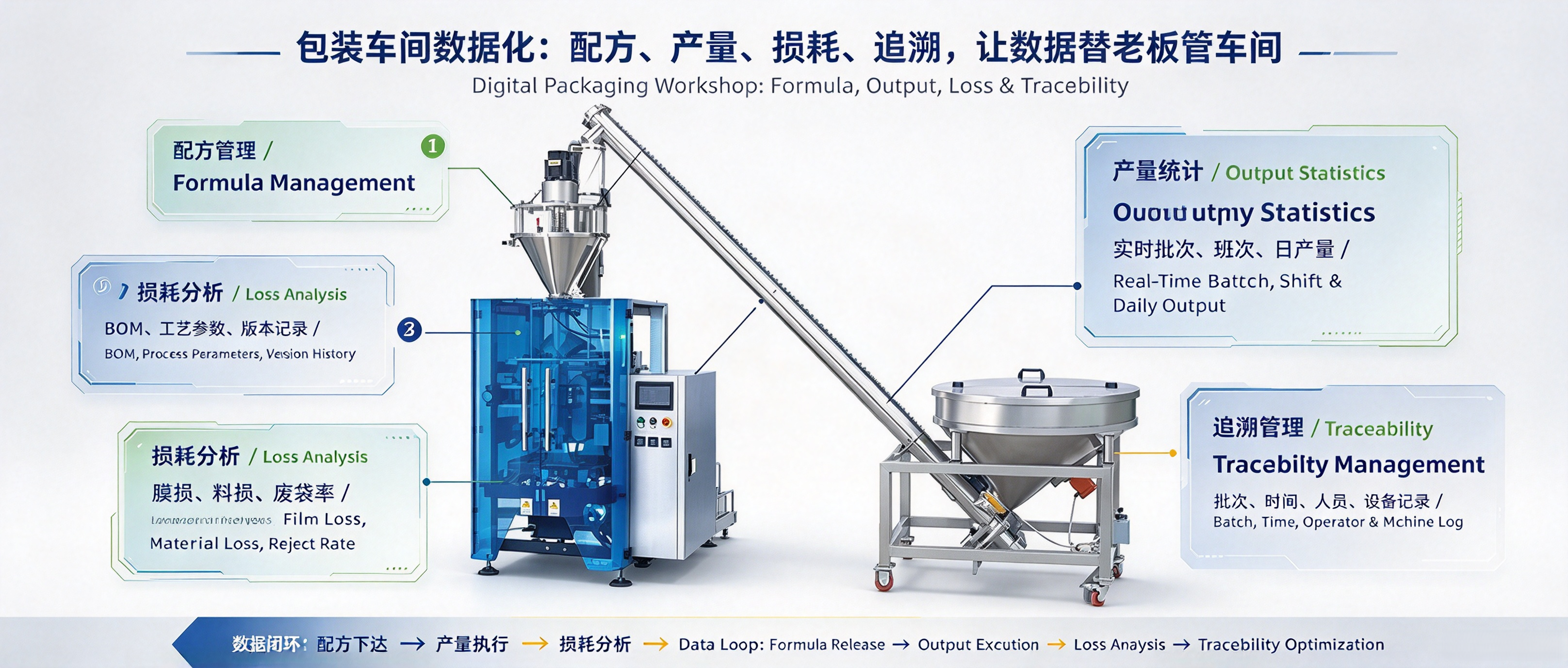
Most floors do not have a machine problem — they have a data problem. The master operator knows how to tune, but when he leaves, the parameters leave too. The boss knows output is wrong, but cannot say where waste happens. The VFFS touchscreen can already store formulas and record parameters — this article shows you how to use it and let data run the floor.
01 Formulas Panel: Store the Master's Memory in the Machine
• What: one parameter set per product — bag length, speed, longitudinal/cross seal temperature, timing, film pull — saved on the touchscreen;
• How: the operation flow's product-selection function, with tiered access (8888/9999) — only trained staff change parameters;
• Payoff: one-key recall on changeover, a new hand does a 10-minute changeover, and the parameters survive an operator's departure.
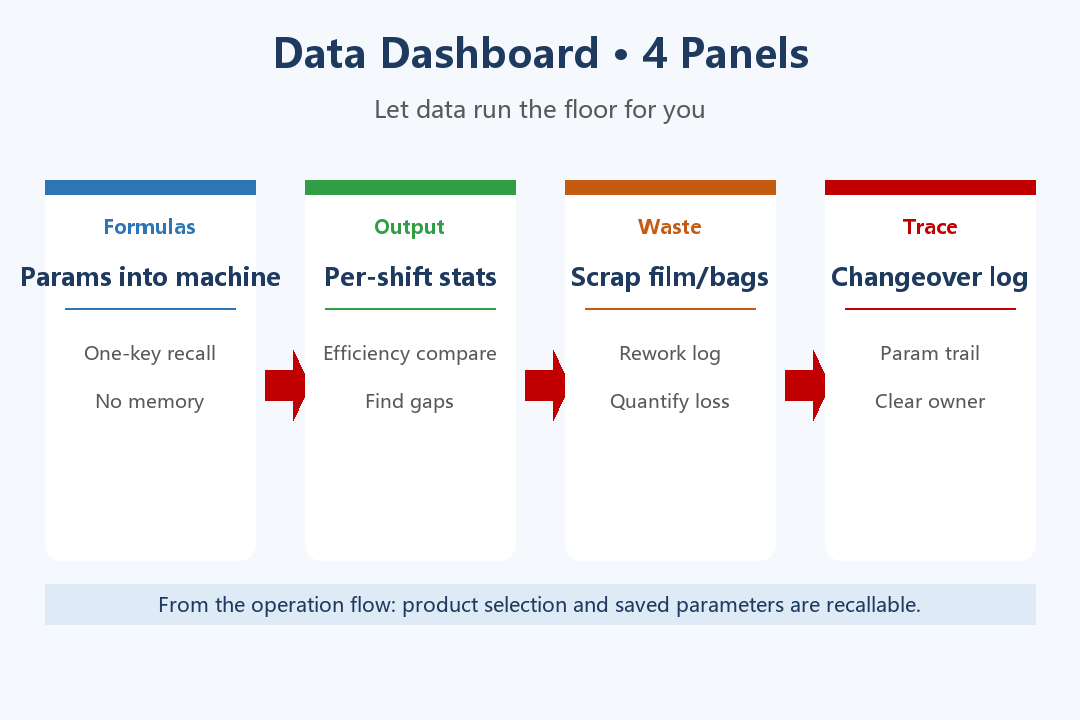

Fig. 1: The four-panel dashboard (from the operation flow — saved formulas and run data)
02 Output Panel: Count First, Then Find the Gap
• What: record per-shift and per-product output — a whiteboard or Excel works; start by recording;
• How: log actual bags/min, shift output and stop counts at shift handover;
• Payoff: when the same product shows a 20% gap between two shifts, you immediately find a handover or maintenance rhythm problem.
03 Waste Panel: Scrap Rate Is the Floor's Best Health Report
• What: record scrap film, scrap bags and rework item by item, grouped by cause — unstable temperature, film drift, changeover trials;
• How: weigh or count scrap at the source before disposal — do not wait for month-end stocktaking;
• Payoff: once waste is grouped, 80% of it concentrates on 1-2 causes — fix the cause, not the part.
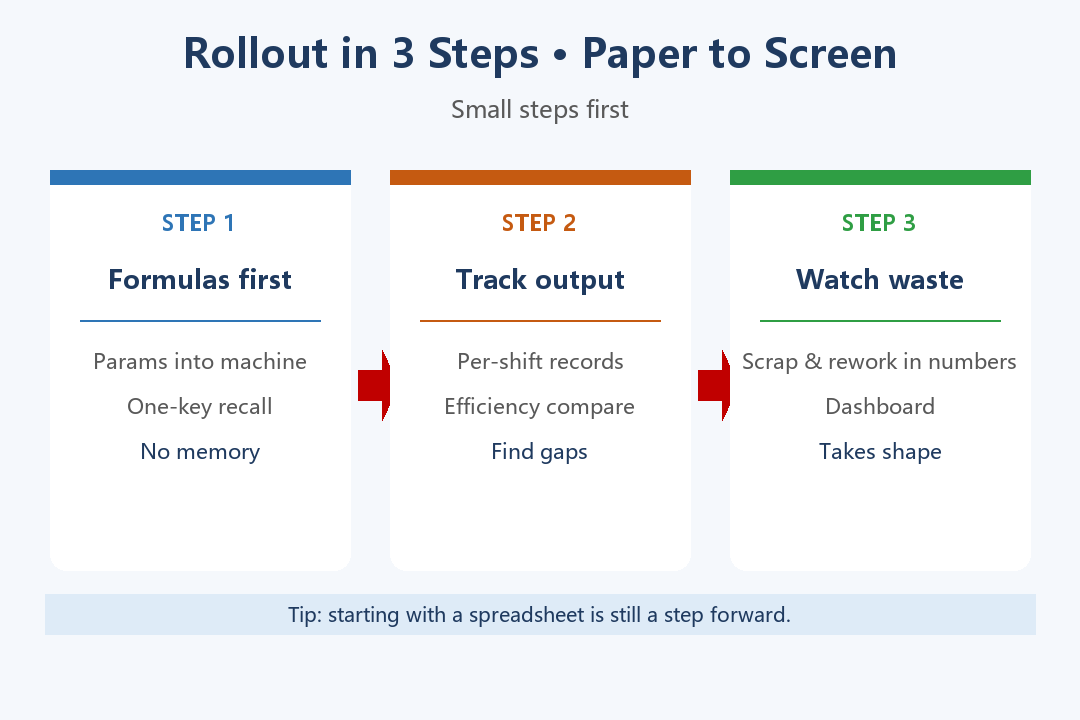

Fig. 2: Rollout in three steps — paper to screen (from the operation flow)
04 Traceability Panel: Parameter Trails, Clear Ownership
• What: log every changeover and parameter change — who, what and why;
• How: shift-handover log plus touchscreen parameter backup every two weeks;
• Payoff: when quality fails, one look at the parameters tells you whether it was formula, operation or material — no more guessing.
Table 1. Four-panel data-management rollout (from the operation flow)
|
Panel |
What to Record |
How to Roll Out |
Payoff |
|
Formulas |
Length/speed/temp/timing |
Touchscreen save + tiered access |
10-min changeover, params survive |
|
Output |
Shift output/speed/stops |
Handover log |
20% gap between shifts found |
|
Waste |
Scrap film/bags/rework by cause |
Count at source |
80% of waste in 1-2 causes |
|
Trace |
Changeover/param changes |
Handover log + biweekly backup |
Failures traced, no guessing |
Final Thoughts
Data-driven management is not buying software — it is using what the machine already has: formulas in the screen, output on paper, waste grouped by cause, parameter changes traced. Finish the four steps and every number on the floor ties out; decisions stop depending on feel.
Reply with the keyword “data” to get the Packing Floor Data-Management Template (Excel — output, waste and trace sheets). Need help structuring your formula system into the touchscreen? Contact the source factory anytime.
Follow the account — more practical content is on the way.


