

5 Myths About VFFS Machines: Hotter Seal Means Stronger? Thicker Film Is Better? More Eye Marks Are More Accurate?
5 Myths About VFFS Machines: Hotter Seal Means Stronger? Thicker Film Is Better? More Eye Marks Are More Accurate?
Shop-floor 'wisdom' may be bursting bags, skewing prints and wasting film — debunked one by one
VFFS Machine Series ·— for operators and setters


Cover: tuning the temperature controller — hotter is not better
The most popular “experience” on the shop floor is not always truth. This article opens up the five most-heard myths about VFFS machines — each with operating evidence — and gets your tuning habits back on track.
01 Myth 1: Hotter Seal Means Stronger?
Sealing is the combination of temperature × pressure × time. Cranking temperature alone is usually a disaster:
• Overheating: film burns, scorches, leaks — it may seal, but the pouch is scrap;
• Right way: set temperature by film material, thickness and line speed — for a cold film leak, raise temperature first, and only then increase action delay;
• Evidence: the operation flow states “for film low-temperature leaks, adjust temperature first, then increase action delay”.
“Sealing is not a temperature race — it is a triangle of heat, pressure and time. Start low, creep up, test each step.”
— From the operation flow, temperature setting
02 Myth 2: Thicker Film Is Better?
• The truth: film thickness affects sealing temperature, cutting force and cost — thick is not strong, thick is not cheap;
• Right way: choose film by product — barrier laminates for long-life goods, single-layer is enough for short-shelf-life products;
• Evidence: film type (PE, laminate, aluminum foil) drives longitudinal/cross seal temperature — not sheer thickness.


Fig. 1: Five myths debunked (from the operation flow and film knowledge)
03 Myth 3: More Eye Marks Mean More Accurate Registration?
• The eye mark gives the sensor a registration point — a clear, single, high-contrast block is the most reliable;
• Cluttered marks cause: false reads, drifting bag length, skewed patterns;
• Right way: keep the mark design simple, align the sensor, lock it, and check the cut position against the pattern.
04 Myth 4: Faster Is Always More Cost-Effective?
• The cost of speed: seal/cut synchronization gets harder, temperature response lags, scrap quietly rises;
• Right way: back-calculate the speed you need from shift output — intermittent ≤120 bags/min, continuous ≤300 — enough is enough;
• Evidence: intermittent and continuous machines serve different tiers; high speed needs high-speed film and filler to match.
05 Myth 5: Changing Product Means Only Changing the Formula?
• The formula stores product, bag length and speed — but when bag length changes, seal/cutter timing must be retuned;
• Right way: after a product change, reset timing by the bag-length band — 80-130 / 130-220 / 220-320 mm map to different parameters — then confirm by trial;
• Evidence: the operation flow's timing settings explicitly match seal/cutter delay and action time to the bag-length band.
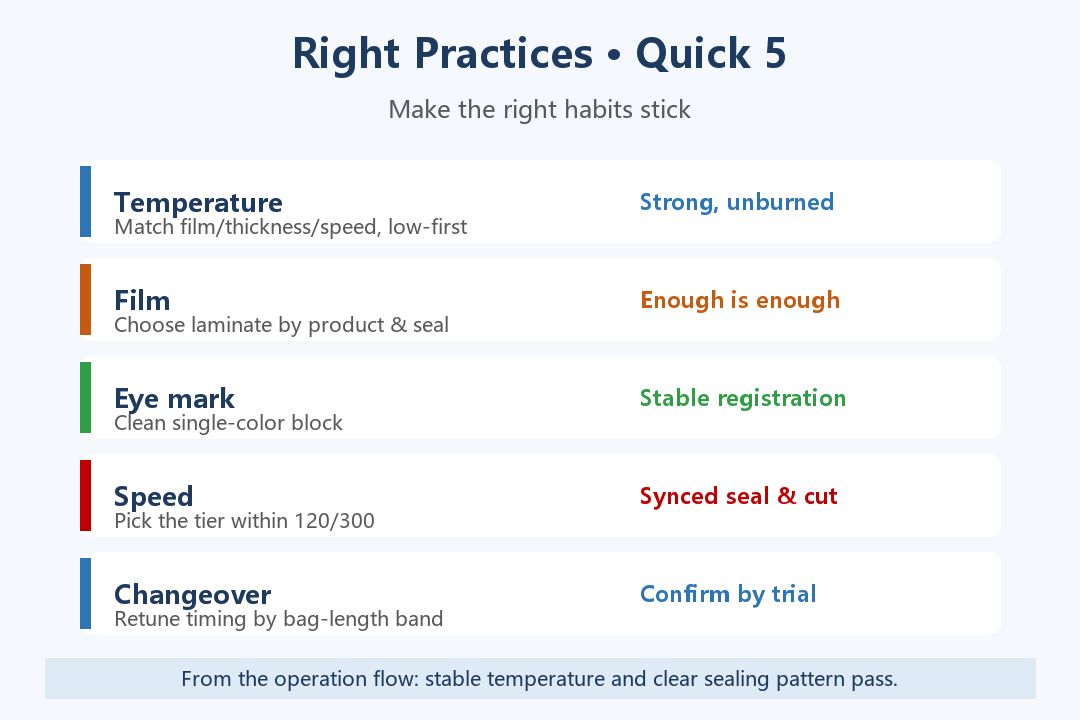

Fig. 2: Right practices — quick 5 (from the operation flow)
Table 1. Myth vs truth quick table (from the operation flow and principle doc)
|
Myth |
Truth (from the operation flow) |
|
Hotter seal is stronger |
Heat × pressure × time — overheating burns film and leaks |
|
Thicker film is better |
Film type sets the temperature, not thickness |
|
More marks = better registration |
Clean single block wins; clutter causes drift |
|
Faster is more cost-effective |
Intermittent ≤120/continuous ≤300; speed needs matched film/filler |
|
New product = new formula only |
Bag-length band forces timing retune (80-130/130-220/220-320mm) |
Final Thoughts
Myths are not scary — passing them on as experience is. Check temperature, film, eye marks, speed and changeover habits against the operation flow, and your machine repays you with lower scrap and steadier seals immediately.
Reply with the keyword “myths” to get the VFFS Tuning Parameter Quick Reference. Stuck on tuning? Photograph the screen parameters and send them over — the source factory will analyze item by item.
Follow the account — more practical content is on the way.


